
5 Fixes for the Most Common Productized Service Failures
Struggling to sell your productized service? These 5 fixes address the workflow, pricing, and scope problems killing your conversions.
Introduction
Turning your freelance service into a productized offer is supposed to simplify everything—no more scope creep, no more endless proposals, no more flaky leads. But if you're like most, your productized service isn’t selling like you thought it would.
Maybe people book calls but don’t convert. Maybe they balk at your pricing or ghost after asking a bunch of questions.
The good news: you’re likely just 1–2 strategic fixes away from turning it around. Here’s a focused list of the most common breakdowns—and how to fix them fast.
1. You Solved a Problem Nobody Cares About
Freelancers often build their productized offer around what they can do instead of what clients urgently need.
Some examples:
- You offer “blog article packages” when the prospect actually needs traffic, not just content.
- You offer “brand strategy” when the client is just trying to update their website next week.
Why this matters: If your product doesn't clearly solve a high-priority problem, no amount of features or polish will sell it.
Fix it:
- Revisit your most successful past client projects. What did they really want?
- Scan communities and sales calls for the "burning pain" your audience actually cares about.
- Rewrite your service title and landing page headline to match that language exactly.
Example: Instead of “3 Blog Posts a Week,” try “Done-for-You SEO Content that Increases Traffic in 30 Days.”
2. Your Positioning Is Unclear or Boring
Generic positioning kills conversions.
“Web design for small businesses” doesn’t mean anything. Neither does “fractional CMO services.” No one came looking for that. They're trying to solve a problem like "Our site looks like it's from 2009" or "We haven’t hit $20k/month yet."
Why this matters: In a saturated market, clients choose clarity over cleverness. They’re in a hurry. If they don’t immediately get what you do and who it’s for, they bounce.
Fix it:
- Get ultra-specific about the client type, problem, and outcome.
- Use copy that mirrors how your best-fit clients talk about their headaches.
Example: Instead of “Podcast Editing Service,” say “Launch Your First Podcast Episode This Week—We Handle Tech, Audio, and Distribution.”
3. Your Pricing Is Misaligned
This happens in two ways:
- It’s too high for your perceived value.
- Or it’s too low and makes clients think “this can’t be good.”
Why this matters: Pricing isn’t just a number—it’s a signal. It tells clients what kind of results to expect.
Fix it:
- Anchor your price against outcomes, not deliverables. (E.g., “a full brand revamp that drives conversions,” not “3 calls + 2 logo options.”)
- If you’re getting “this is too expensive,” test a 2-tier model with a clear entry point offer.
- If you’ve underpriced, raise it until some people say no—that's when it’s right-sized.
Also: Bundle high-value consultative support into your pricing. Don’t make Q&A or strategy an afterthought.
4. Your Sales Flow Kills the Momentum
You’ve done the hard work—hooked a potential client, booked a call, and explained your offer. But then you say, “I’ll send over a proposal.”
Disaster.
Now they’re in inbox limbo. You’ve given them time to shop around, overthink, or disappear entirely.
Why this matters: Your buyer was emotionally ready to act. Waiting 24–72 hours lets that motivation die.
Fix it:
- Close live on the call. Use a tool like Manager List to adjust scope, present price, and capture signature immediately.
- Reformat your call: First 10 mins = discovery, next 10 = present offer, final 10 = answer objections and close.
- Replace generic calls to action with directional next steps: “Want me to show you exactly how this would work for you?”
5. Your Scope Doesn’t Fit How Buyers Actually Buy
You might love your multi-step design process, or your 4-phase marketing plan. But if your scope doesn’t match how buyers think (or budget), they’ll hesitate.
Why this matters: Scope should reduce decision-making, not increase it. If your offer feels too complex, risky, or vague, they’ll pass.
Fix it:
- Break heavy offers into smaller, outcome-driven chunks.
- Use productized milestones, not hourly estimates. Deliver “Strategy Roadmap + 90-Day Plan” instead of “10 hours of consulting.”
- Offer a “starter version” that still delivers real ROI, reduces buyer anxiety, and opens the door to upsells.
Think: “Audience Audit in 1 Week” → “Messaging Framework” → “Full Brand Rollout.”
Conclusion
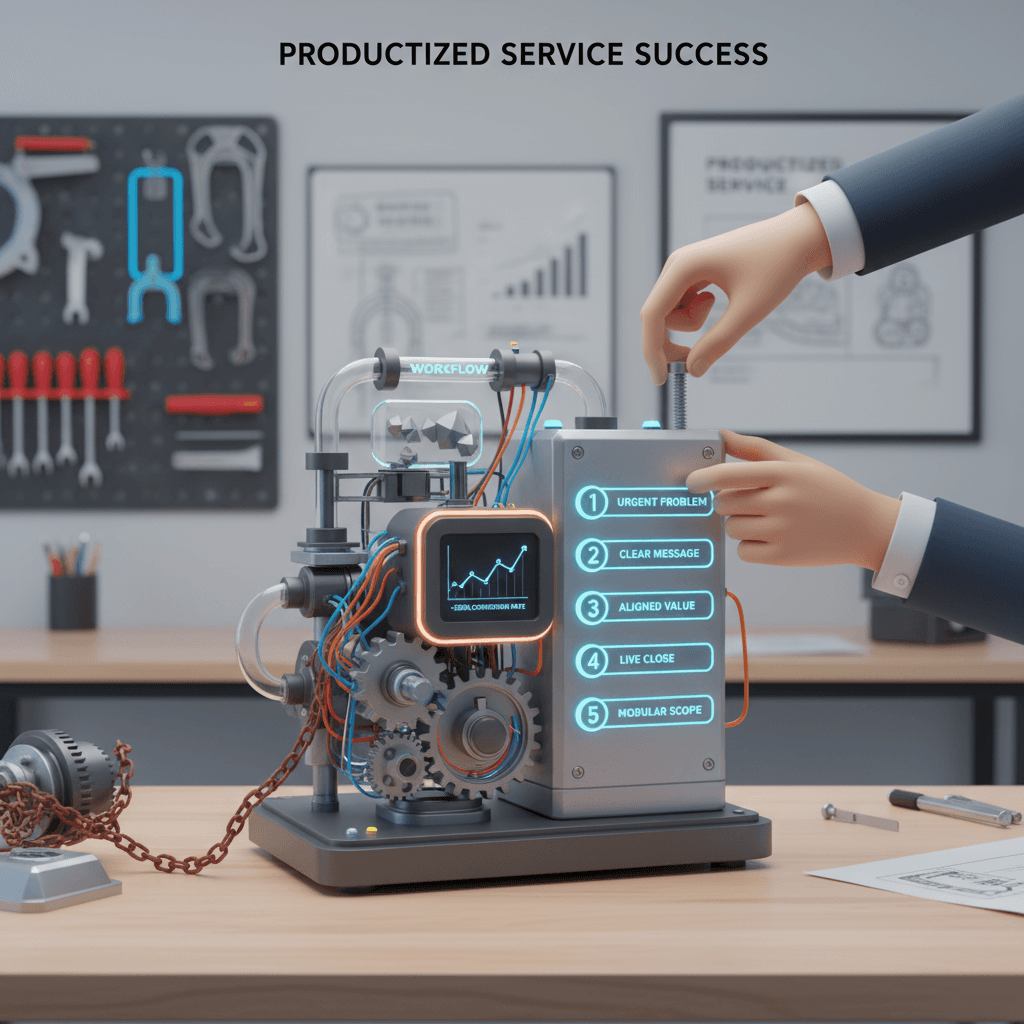
If your productized offer isn’t converting, don’t scrap the whole thing. Tweak the essentials:
- What pain are you solving?
- Is your message sharp?
- Does the price say “this works”?
- Can clients say yes while they’re ready?
- Are you meeting them where they are?
Dial in just one of these and you might 3x your close rate.
Next step: Practice live selling. Use a tool (like Manager List) that lets you present your offer live, adjust it in real time, and close the deal on the call—no follow-up PDFs, no ghosting.
Frequently Asked Questions
- What if I don’t want to get on sales calls?
- Productized offers can work async, but your messaging and checkout flow must do double the work. If you're not converting, live calls are the best feedback loop.
- What’s the ideal price for a productized service?
- Depends on your audience. Aim for a price tied to clear ROI. A good starting point is $1,000–$5,000 for direct business impact and fast delivery.
- How do I know if my offer is too broad?
- If it could apply to 10 different industries, it’s too broad. Productized services convert best when they solve one specific problem for one type of person.
- Should I use a sales page or discovery call?
- Use both. A strong landing page qualifies the lead. A fast discovery-to-close process (ideally same call) seals the deal.