
Why "Retainers" Are the Only Way to Scale
Feast or famine is a choice. Learn how to transition from one-off projects to recurring revenue retainers.
Introduction
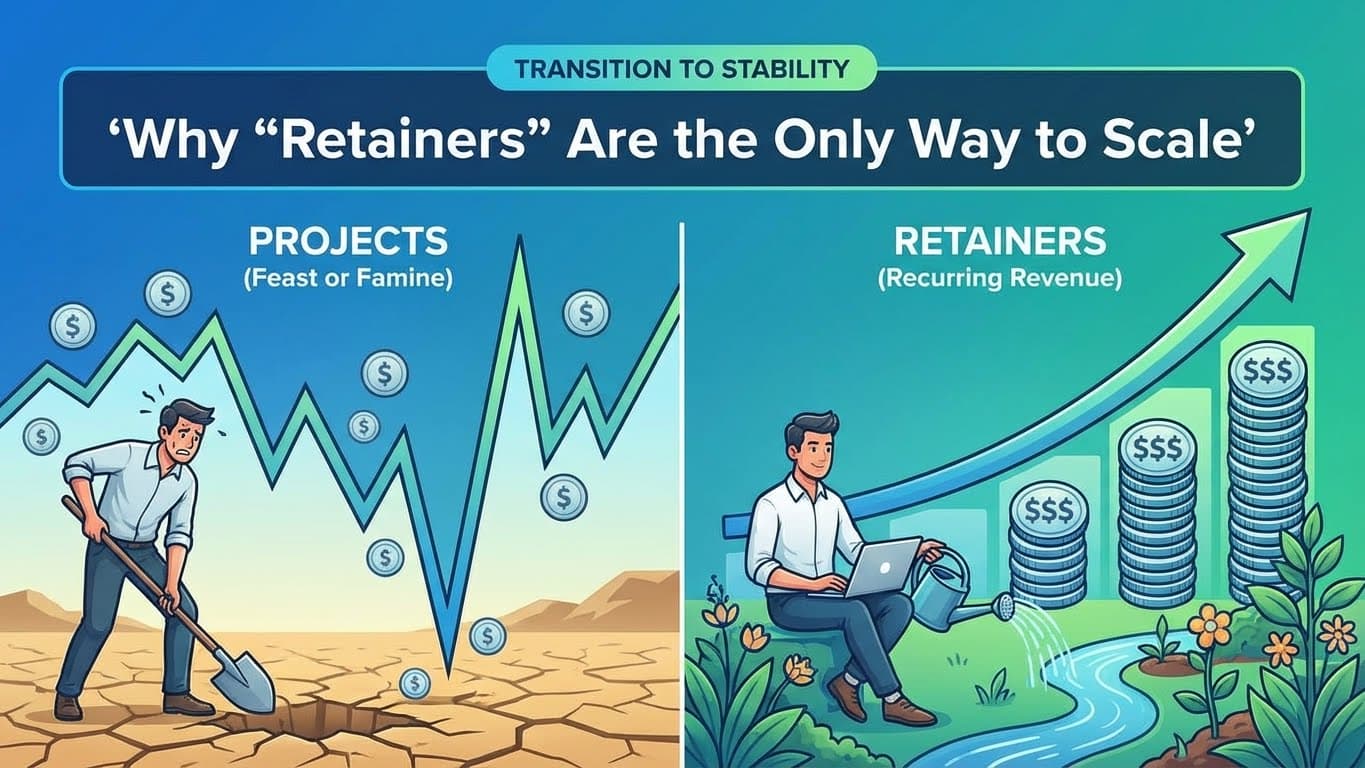
The hardest part of freelancing is finding clients. If you only sell one-off projects (e.g., "Build a Website"), you have to find a new client every single month to survive.
This is the "Feast or Famine" cycle.
The solution is Recurring Revenue. You need to sell Retainers.
Project Mindset vs. Retainer Mindset
Project: "I will build this thing for you." (Transactional) Retainer: "I will ensure this result for you." (Relational)
Clients prefer retainers because they want peace of mind. They want to know that when something breaks, you are there. They don't want to hunt for a new freelancer every time.
Types of Retainers
- Maintenance: "I will keep the site updated, secure, and fix bugs." ($300/mo)
- Advisory: "We will have a 1-hour strategy call every month." ($500/mo)
- Deliverable: "I will write 4 blog posts per month." ($1,200/mo)
- Access: "You get priority support and up to 5 hours of my time." ($1,000/mo)
How to Pitch a Retainer
Don't sell "hours." Sell "insurance."
The Pitch: "We've just launched your new site. It's beautiful. But software needs care. For a flat monthly fee, I'll handle all updates, backups, and small tweaks, so you never have to worry about your site going down. You just focus on your business."
Structuring Retainers in Manager List
In Manager List, you can create a Recurring Item description.
When you send the proposal for the main project, add an optional section: "Post-Launch Support Plan."
If they toggle it ON, you've just secured MRR (Monthly Recurring Revenue) before the project even starts.
Conclusion
If you have 10 clients paying you $500/mo, that covers your rent and food. Everything else is profit.
That is freedom. That is scale.
Frequently Asked Questions
- What if I don't use all the hours in a month?
- That is the point. Some months you work less, some more. It balances out. Do not roll over hours. Use "Use it or lose it" policies to keep it simple.
- How do I bill for this?
- Set up an automatic recurring invoice in Stripe or your accounting software. Do not chase checks every month.